The Dorsoduro 900 - Aprilia’s Supermoto?
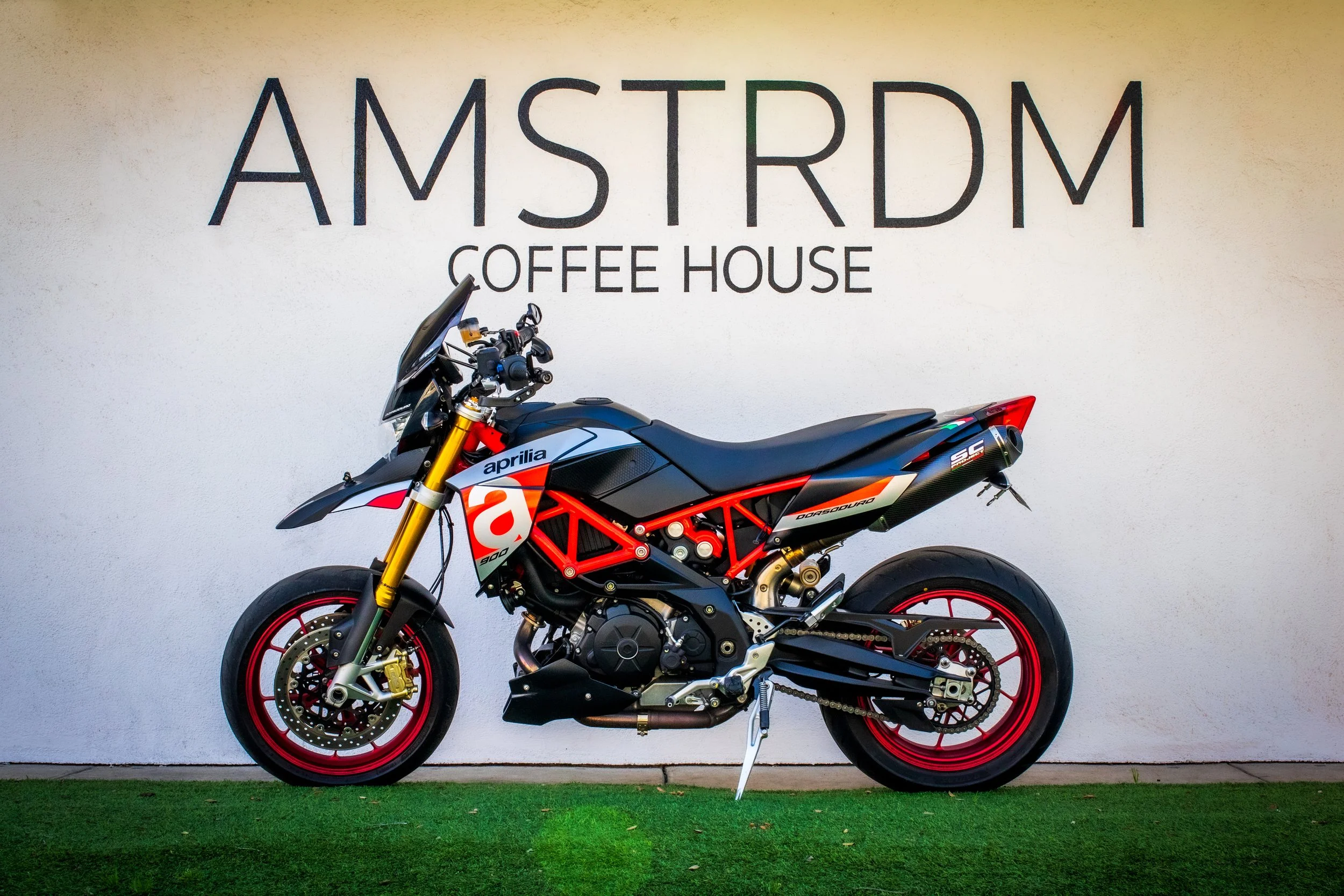
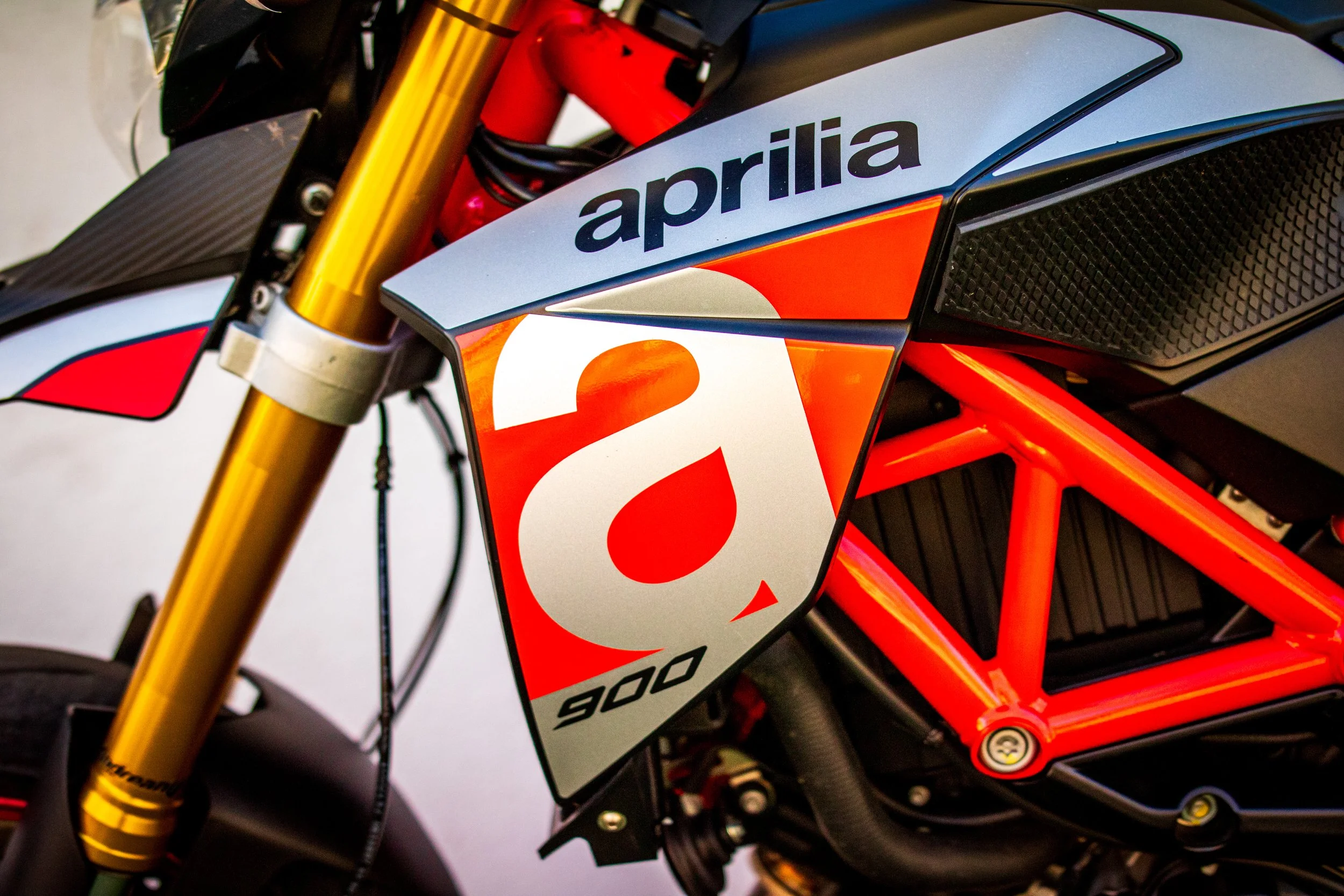
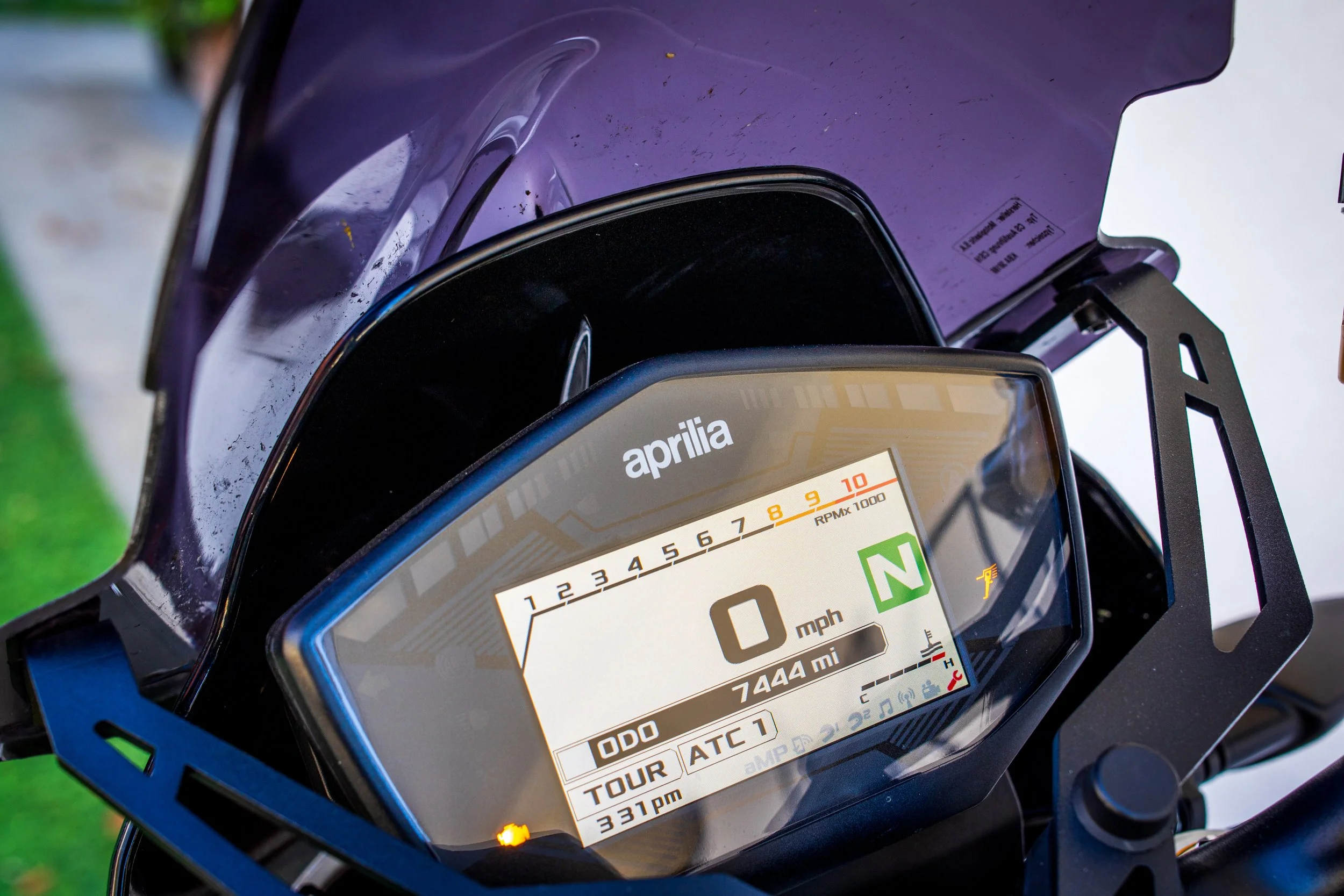
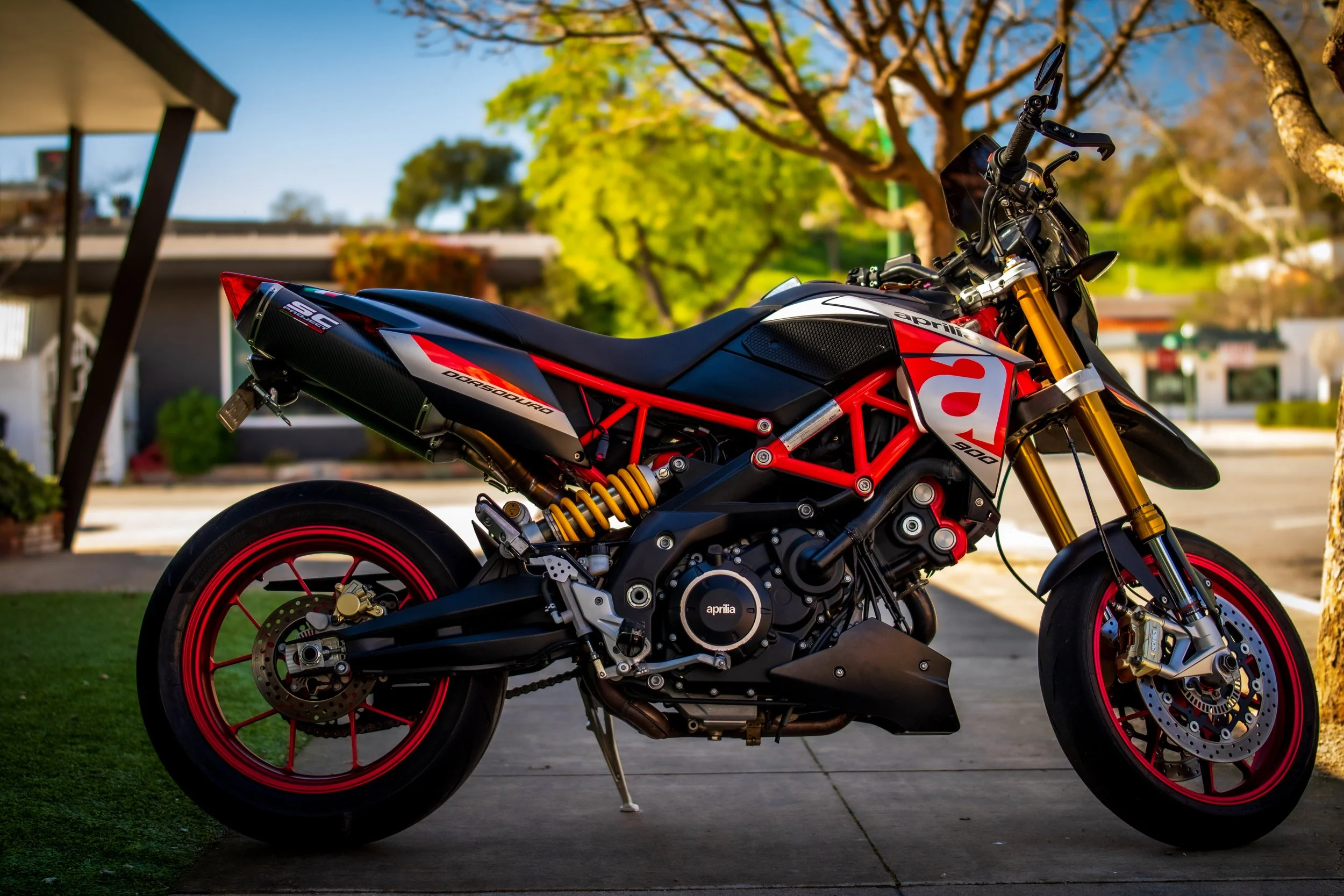
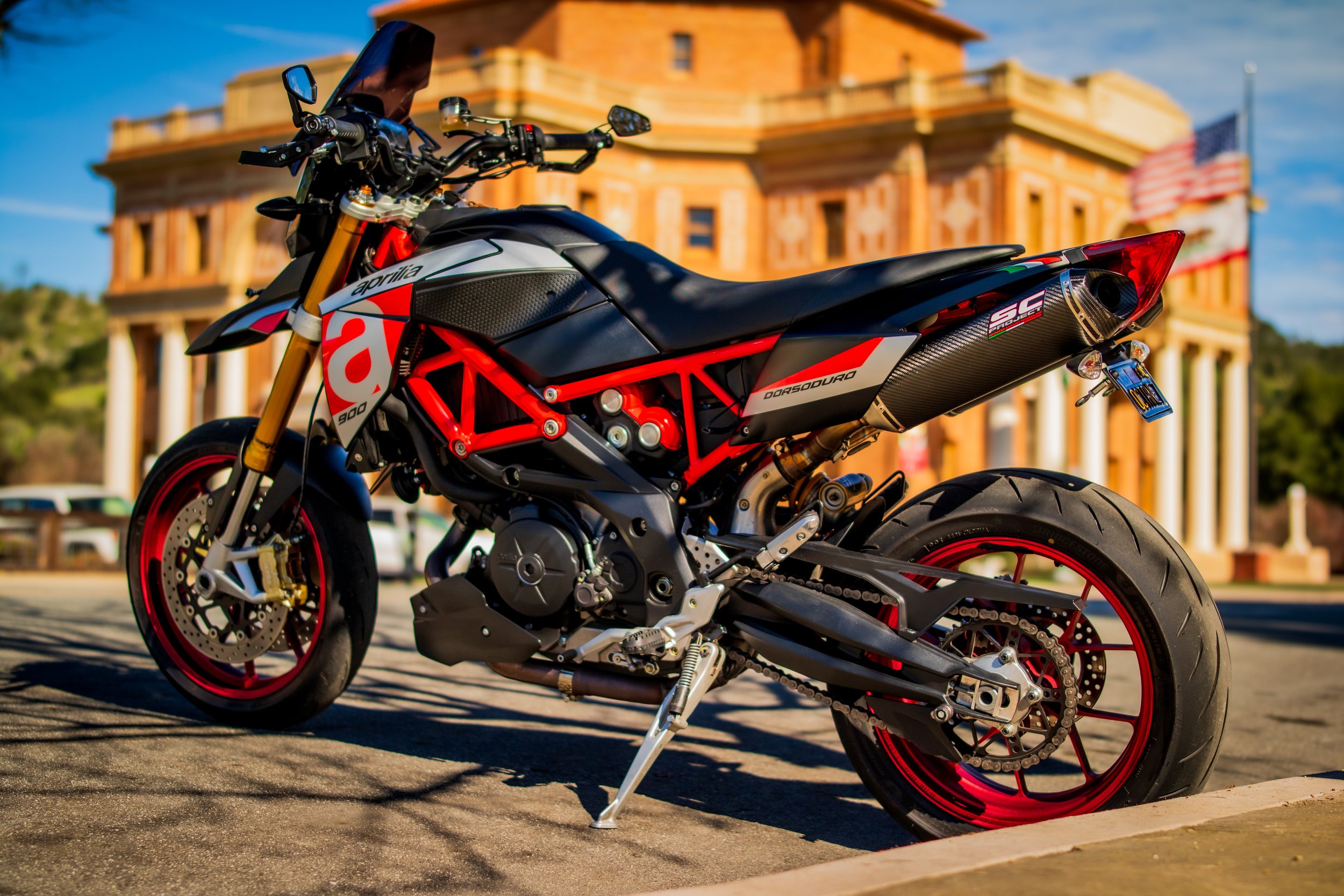
The Aprilia Dorsoduro has had an interesting history of development from its original rendition of the 750 platform to the now discontinued 900. The first time riding the 750 I enjoyed the surprisingly comfortable seating position, albeit some lacking punch and chassis confidence coming from Aprilia V4 platforms the last couple of seasons. For the street however, it was incredibly fun. After two years of spirited ownership, it landed in the hands of a local riding buddy and within a week there was 2018 Dorsoduro 900 in my garage. I had been eying one for its updates, redesigned motor, chassis, and the new TFT display. Over this post I will cover the updates, parts and tuning that truly allowed it to wake up and rip.
Motorcycles today often fit neatly into defined categories—sportbikes for track performance, touring for long-distance, adventure to cover the pavement and trails, and finally naked bikes for your everyday street riding. This 900 doesn’t really fit cleanly into any of those boxes; Instead, it breaks the mold as a heavier than what seems reasonable street style supermoto.
The platform hits a strange niche for those that like a riding experience that puts you connected to the motorcycle, not just on it. With a taller seat height, it fit me well at 6’1, 200lbs. The chassis begged to be ridden with intent; lots of body language, deep in the brakes, direct bar input, and sooo much throttle. It rewards a rider for loading the pegs, putting weight down low, becoming more nimble than a 480lb motorcycle deserves to be.
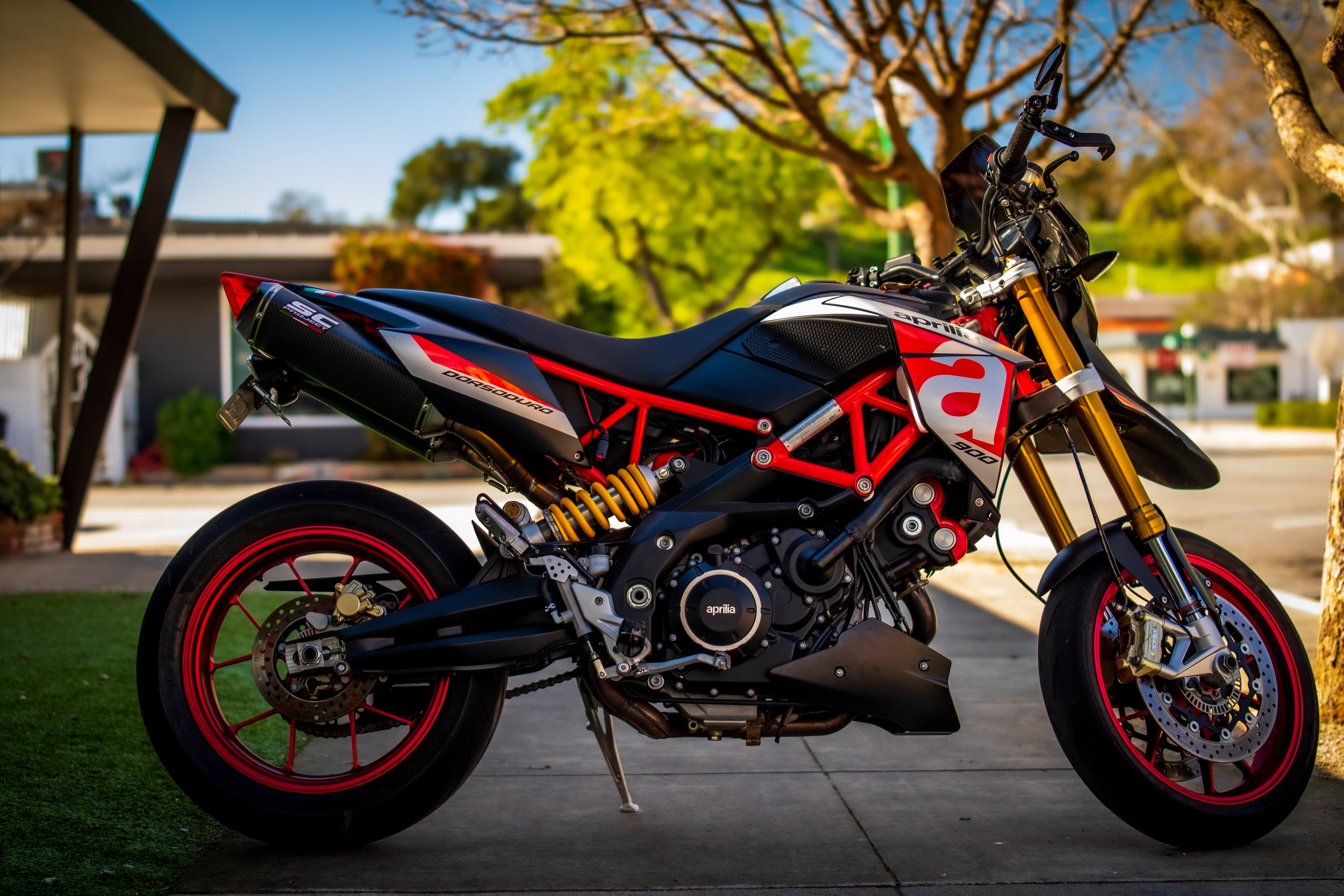
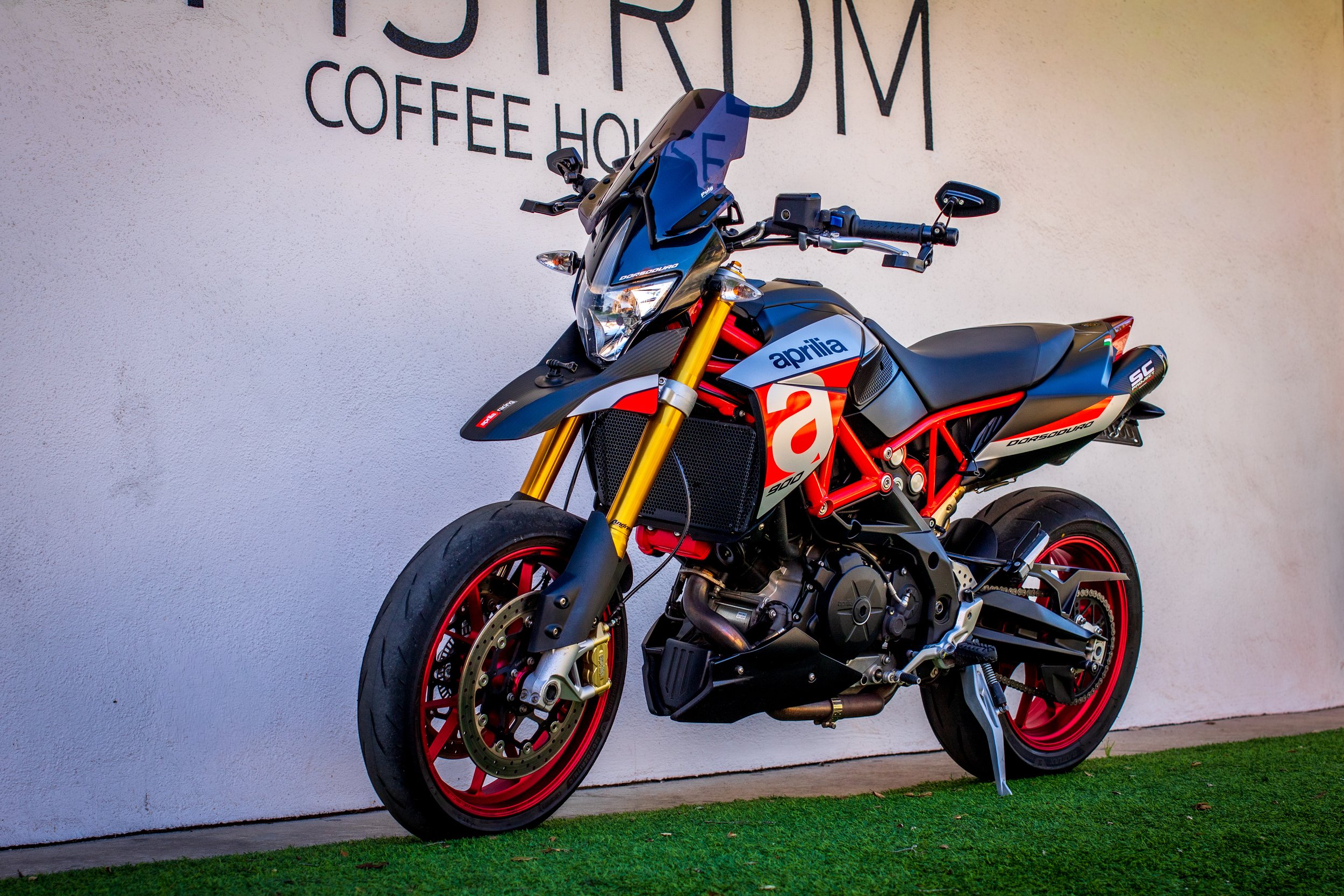
Side view of the 2018 Aprilia Dorsoduro 900
It’s clearly designed for riders who value involvement and personality over strict practicality. With its upright stance, torquey V-twin engine, and playful chassis, the Dorsoduro delivers a riding experience that feels intentionally raw, engaging and pleasantly analog in a world now filled with today’s tech driven motorcycles.
There is some value to the electronics as well. Multiple levels of Traction Control provide confidence in mixed terrain where grip is questionable. 3 separate riding modes are available by pushing the start button while off the throttle to provide a quick change between Rain, Touring and Sport. If you like the front wheel coming out to play, I found the Sport mode with TC off provided the raw and engaging feeling that a supermoto style bike evokes. However, it is nowhere near as agile as a true 450 supermoto or even the 690 SMC-R or Husky 701, but those can’t cover the range this can as easily.
Aprilia’s V-Twin Motor
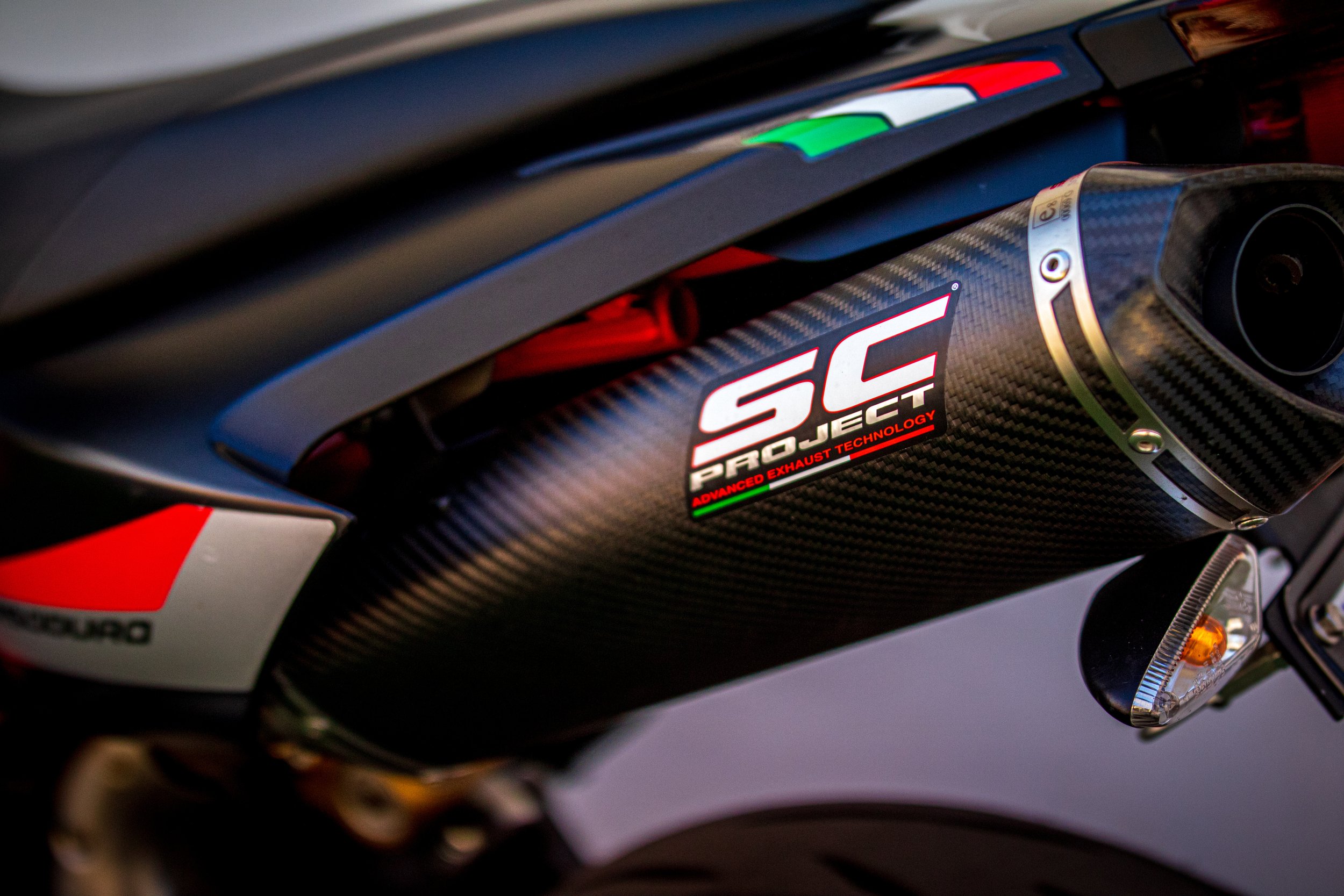
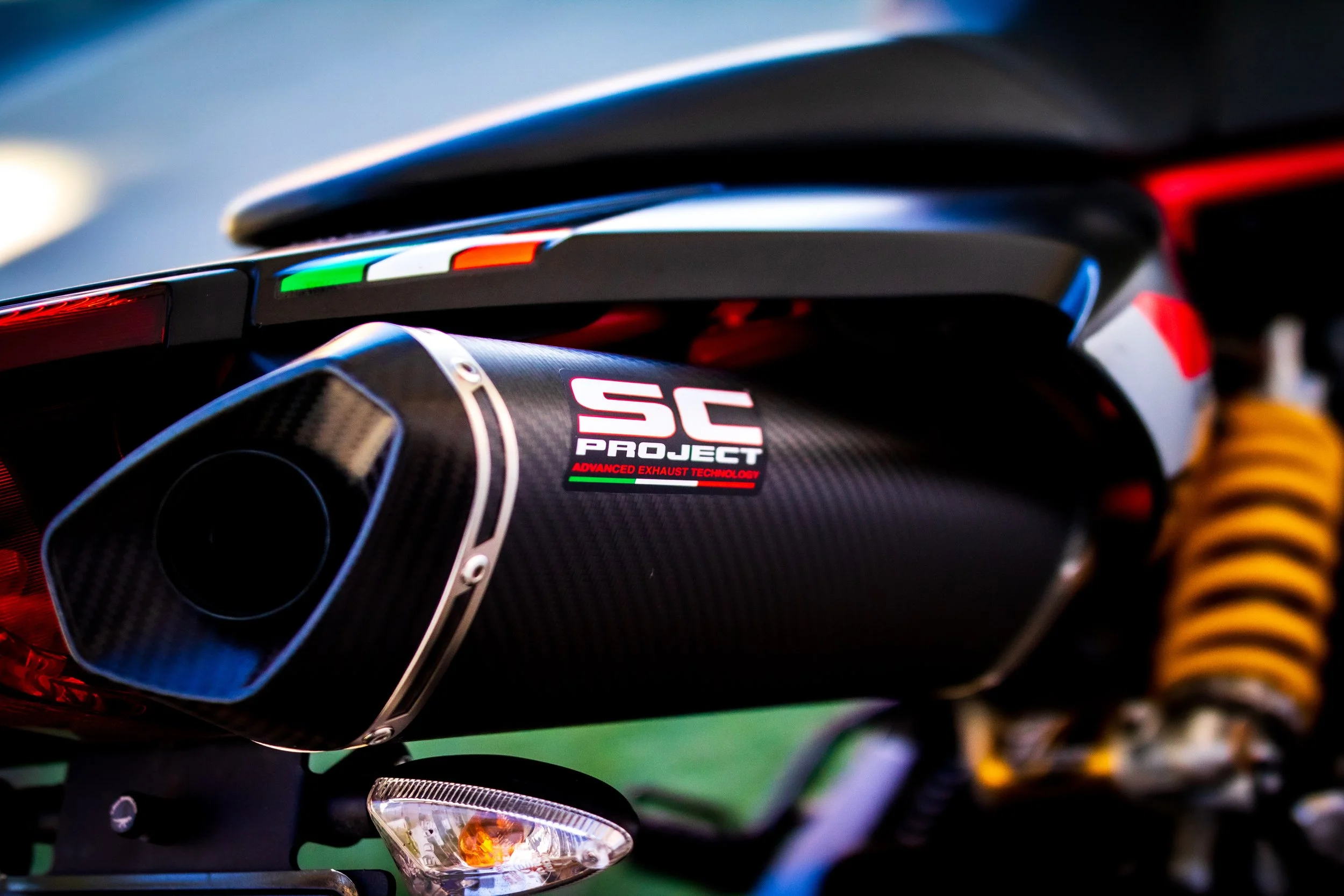
At the center of this beast is an 896cc V-twin engine that focuses on usable torque and immediate throttle response. Rather than chasing extremely high horsepower numbers, the engine emphasizes a strong midrange, and it does so in a fantastically. Out of the box it was a bit snatchy onto the gas, so this was corrected by fitting a Gabro Upmpap, DNA air filter and SC Project Twin Carbon Cans.
The result is a power delivery that feels oh so lively at everyday road speeds. Roll on the throttle exiting a corner and the bike responds instantly, pulling forward with a smooth but assertive surge. This type of engine character suits the bike’s overall philosophy: accessible performance that encourages active riding.
Stopping Power
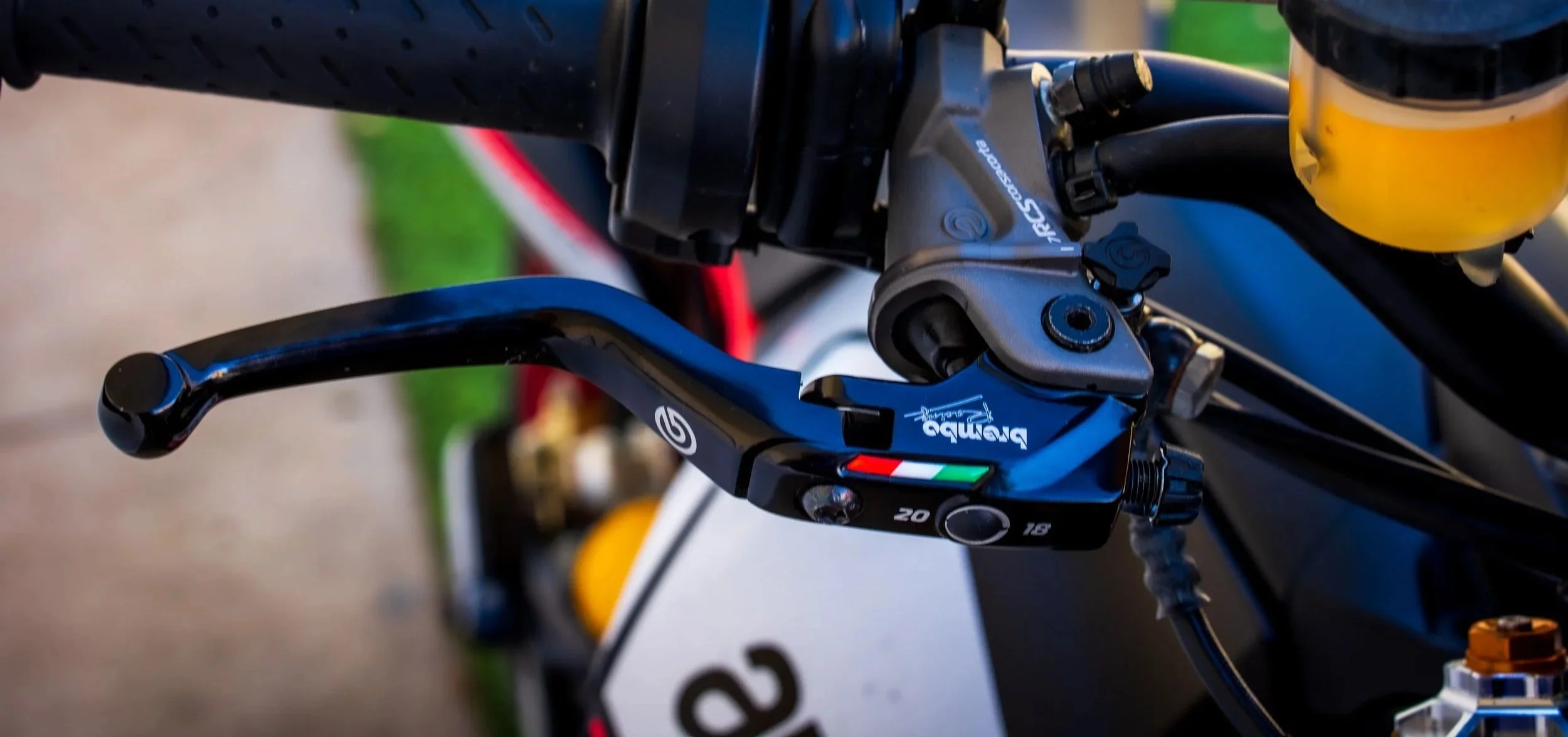
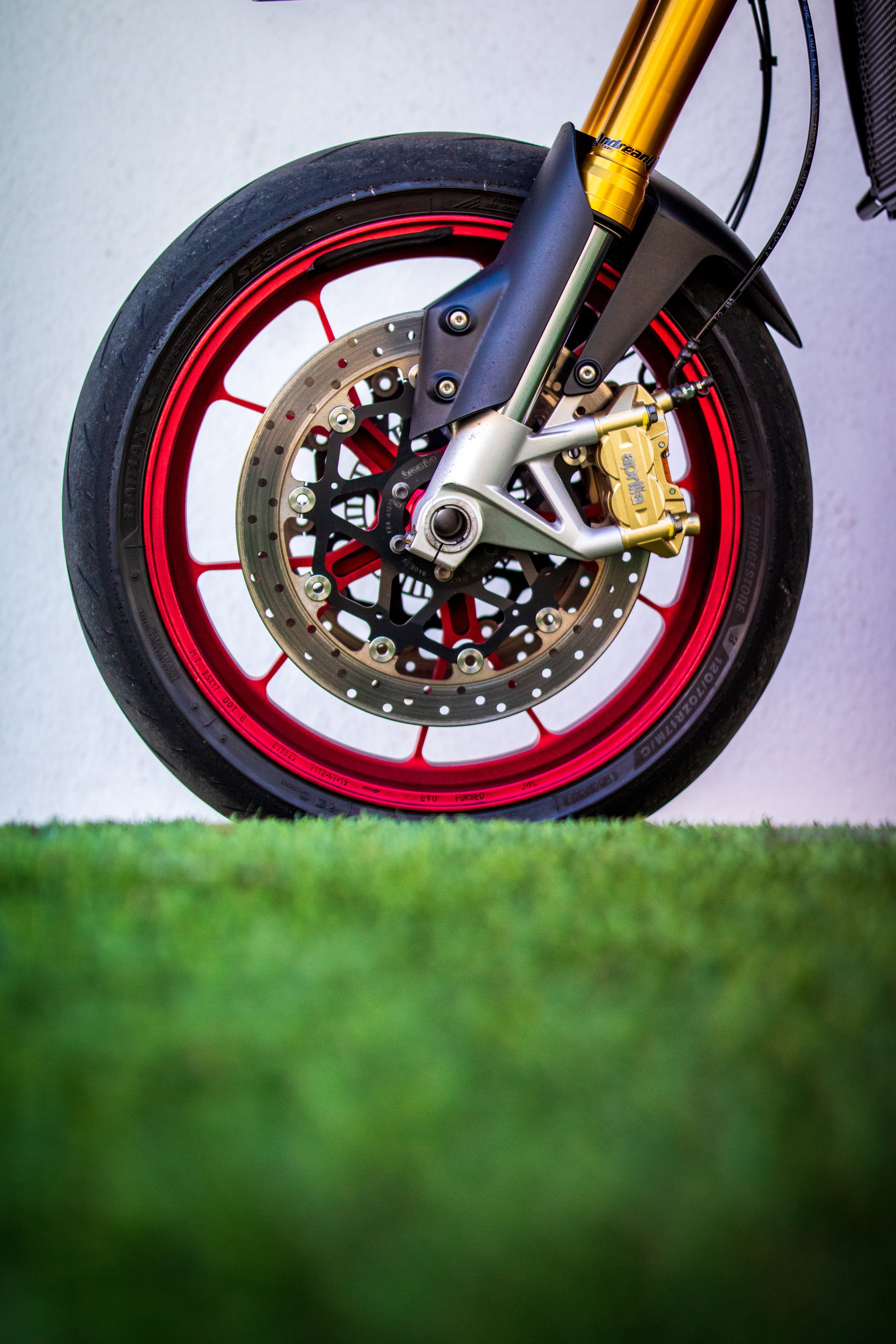
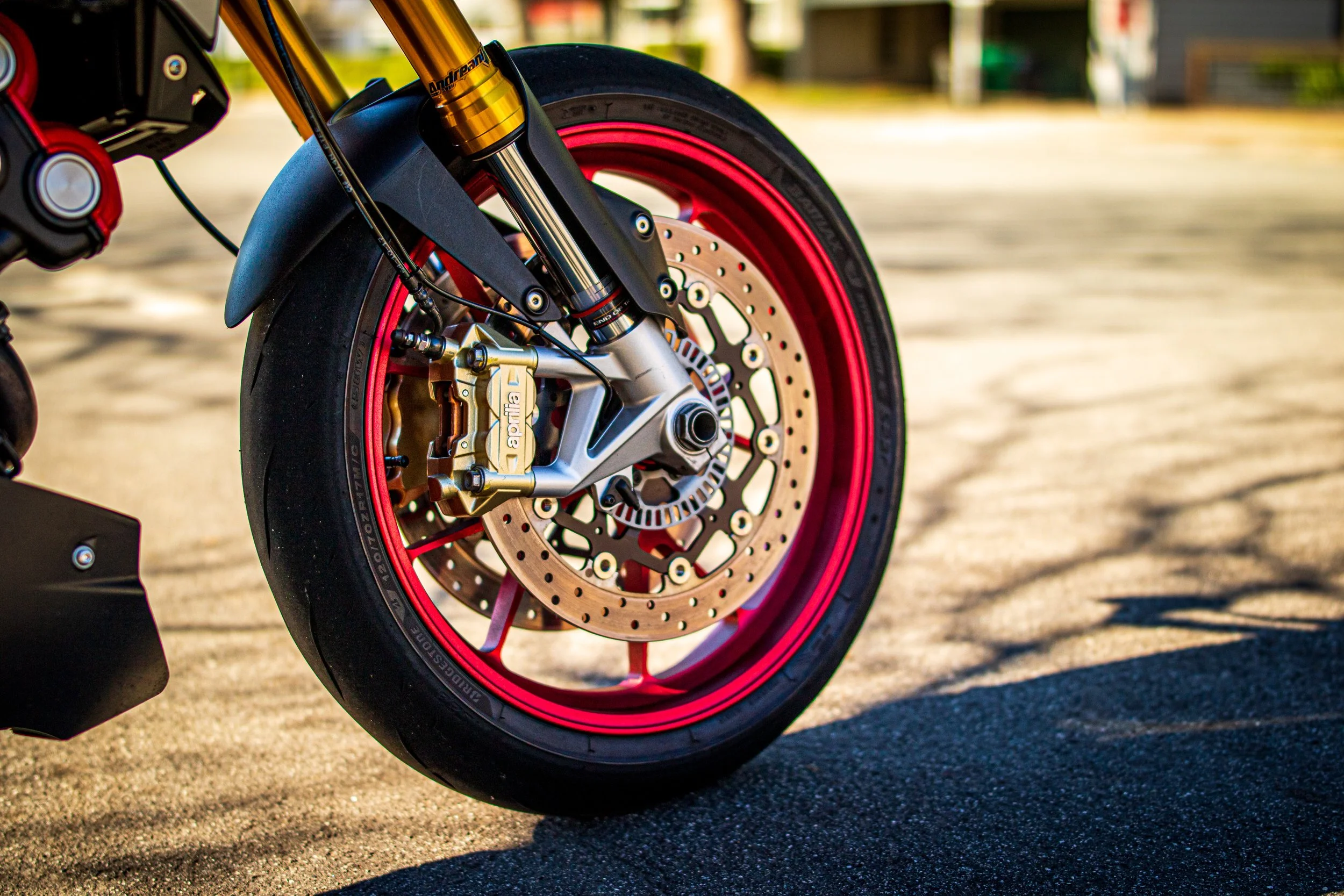
To bring the beast to a halt, the brakes were sorted with a Brembo RCS17 Corsa Corta, providing adjustability not only in lever ratio for better modulation, but also in lever take up. This allows the rider to set the engagement point in addition to modulation, providing some much needed improvement over the stock assembly. Pads were tackled with Brembo HH Sintered pads, providing immediate stopping power when asked and paired to a set of traditional brembo discs, shedding additional unsprung weight.
The Calipers are a strange 85mm offset that were made custom for this application, which reduced the ability to change to the more desirable M50 calipers commonly available today, and the one issue I ran into was that the caliper pots would become sticky and not retract well after a few thousand miles, so cleaning these during regular maintenance is a must to maintain top performance. They work quite well with this setup however, and you really don’t need more brake for this bike than what is offered here.
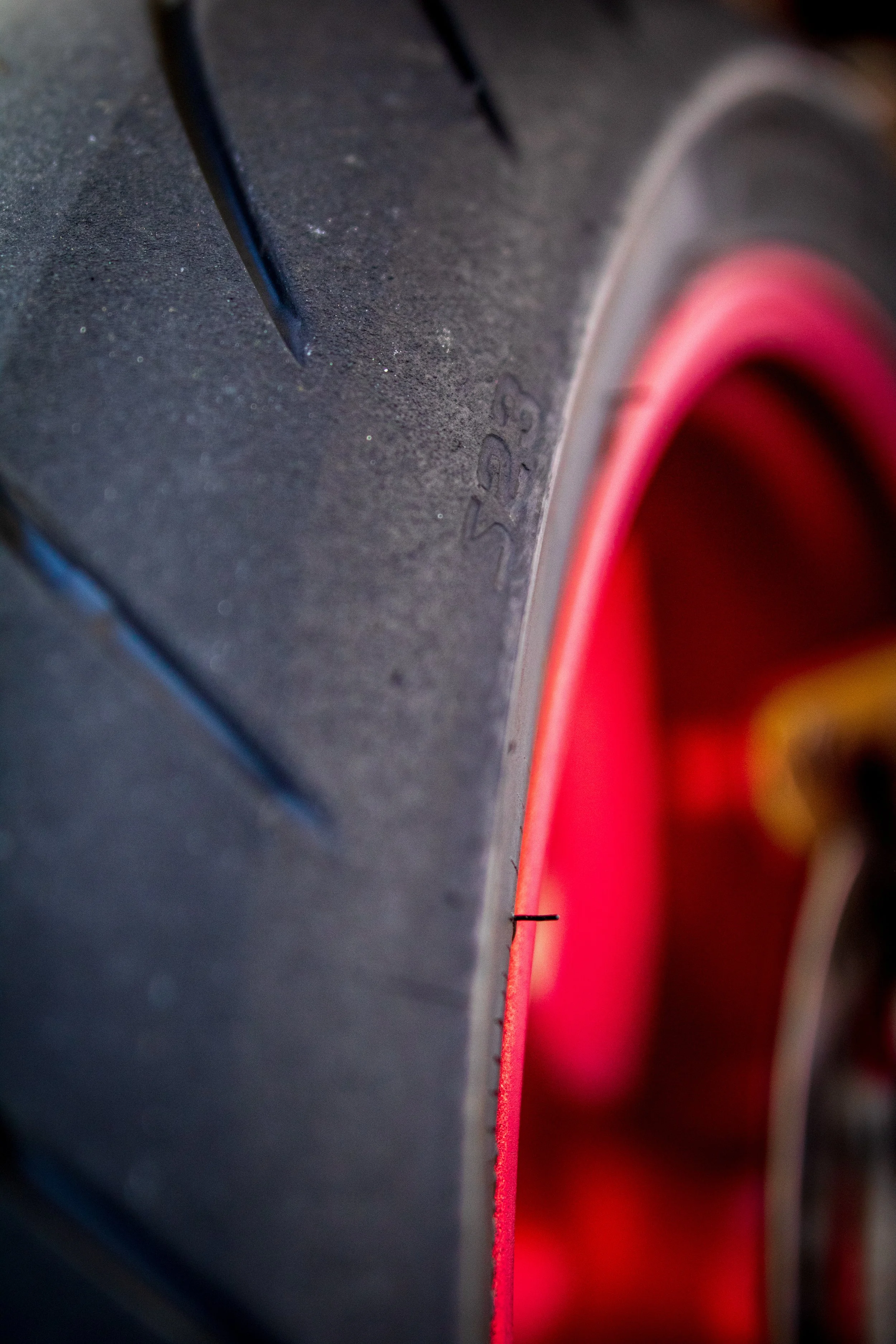
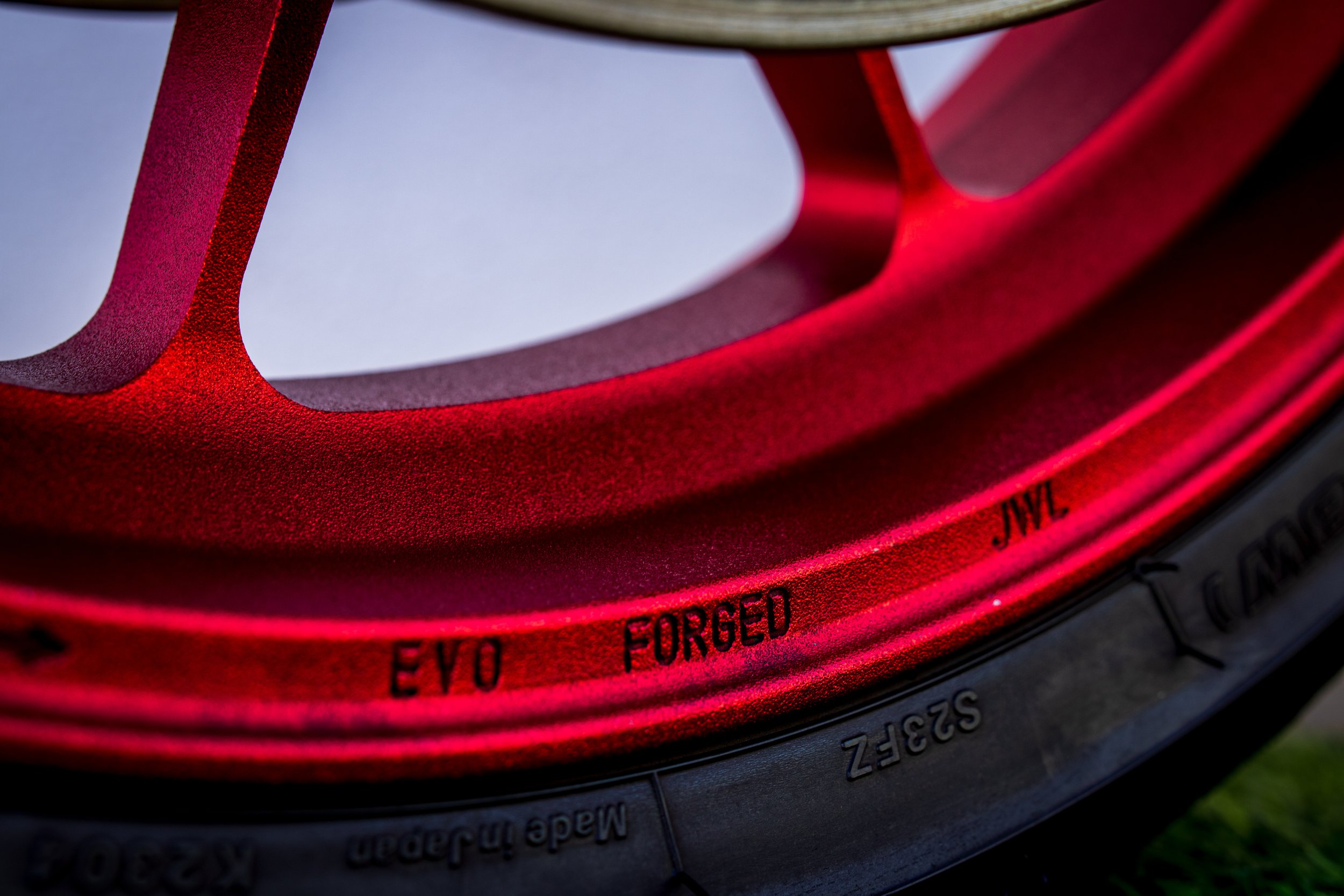
Finally I sourced a new set of Factory Forged RSV4 wheels to further reduce unsprung weight by dropping centrifugal rotating mass, thus reducing braking distance, increasing acceleration and making the machine just look the part deserving of a “Factory” title.
Riding Position & Suspension: Tall, Wide, and In Control
One of the most noticeable aspects is its riding position. The seat height is relatively tall, and the wide handlebars place the rider in an upright and commanding stance.
This configuration creates several advantages:
Greater visibility in traffic and better optics in Urban cities
Improved leverage over sport bike counterparts
Wide handlebars provide excellent control when initiating turns or quickly changing direction.
Encouragement of active riding
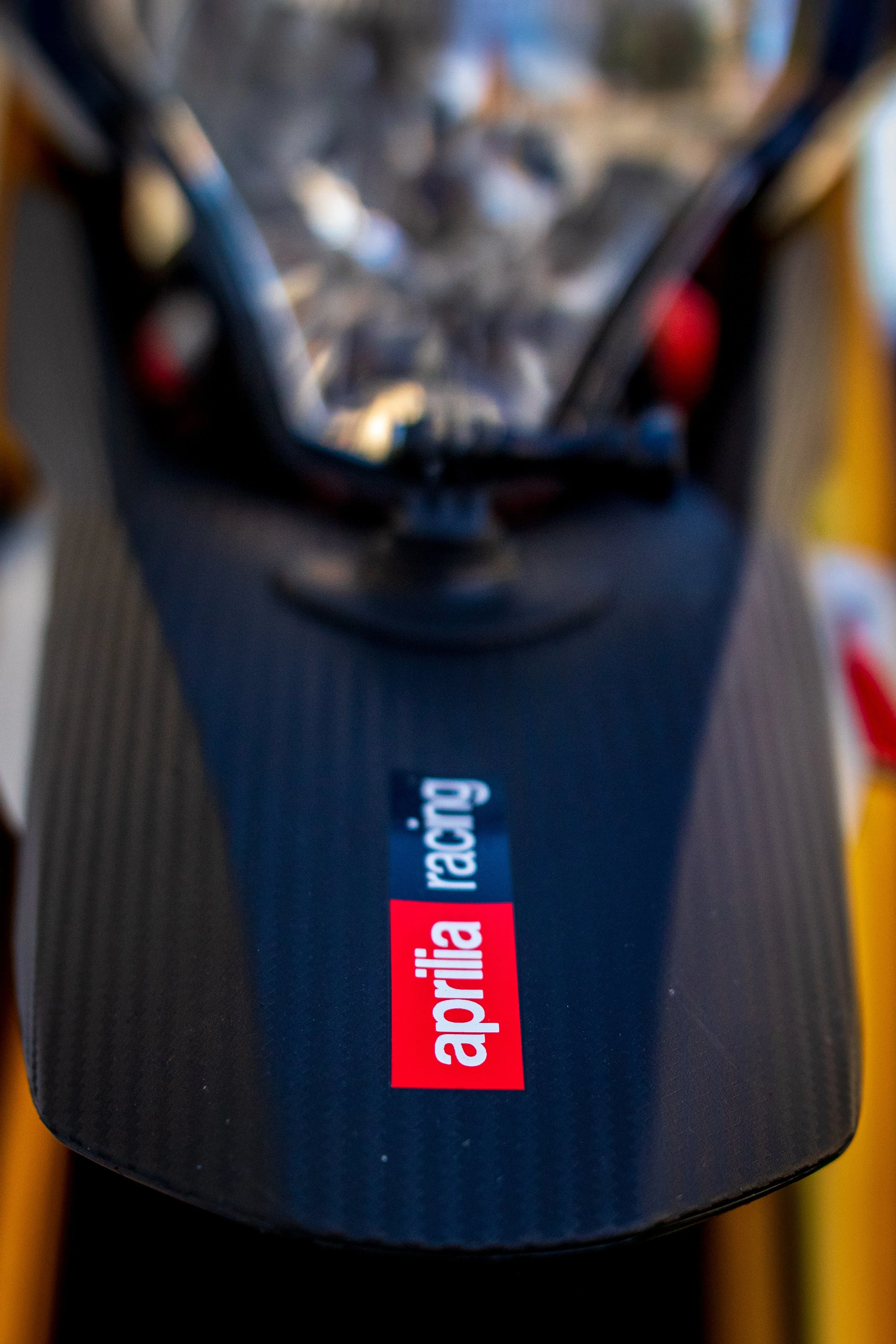
Unlike a tucked sportbike position, the Dorsoduro’s ergonomics invite riders to move around on the bike—similar to how riders interact with supermotos or dirt bikes. To enhance the sporty feel I dropped the tall mirrors and hand guards in favor of CRG lane splitter mirrors and a set of Woodcrafts racing lever guards.
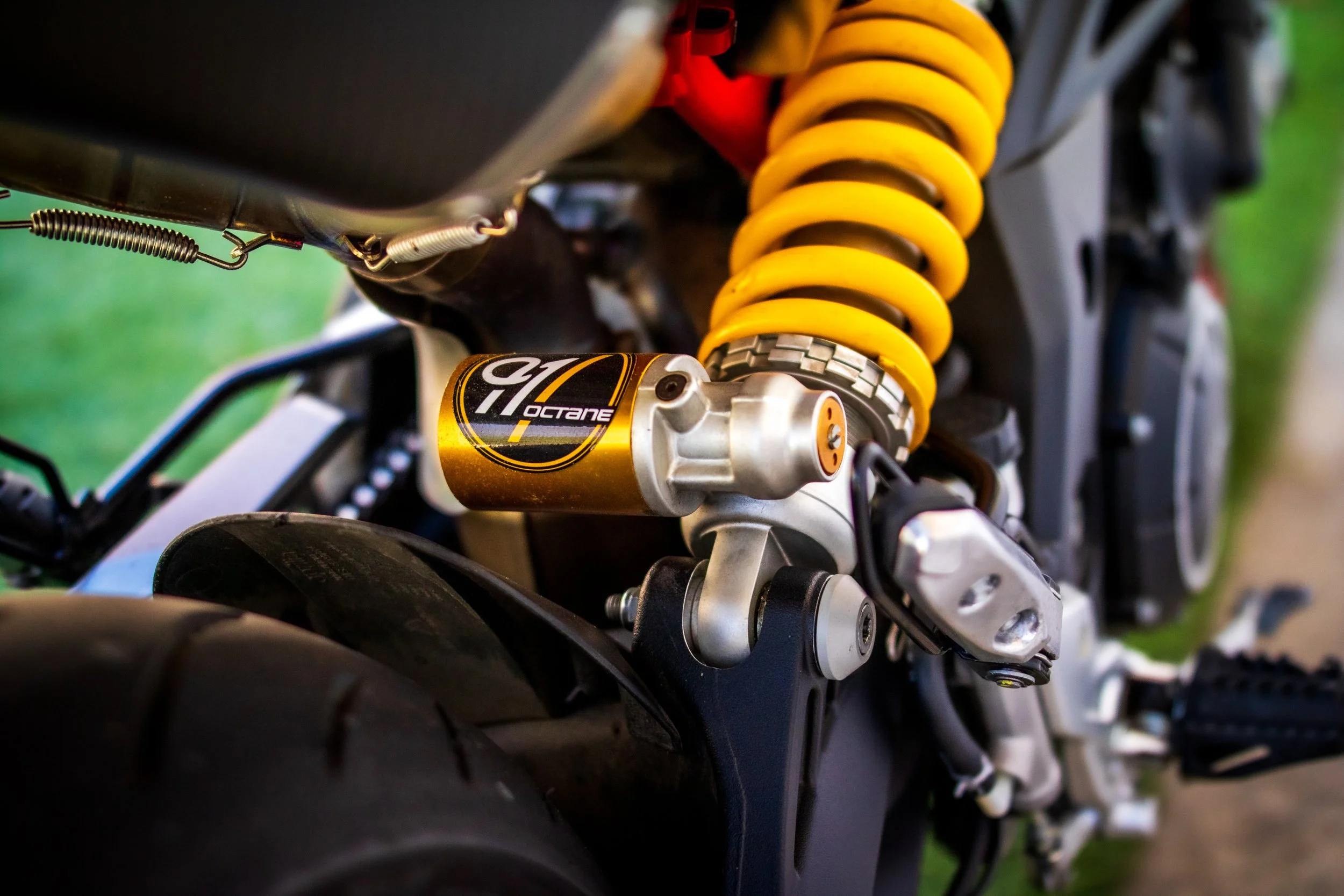
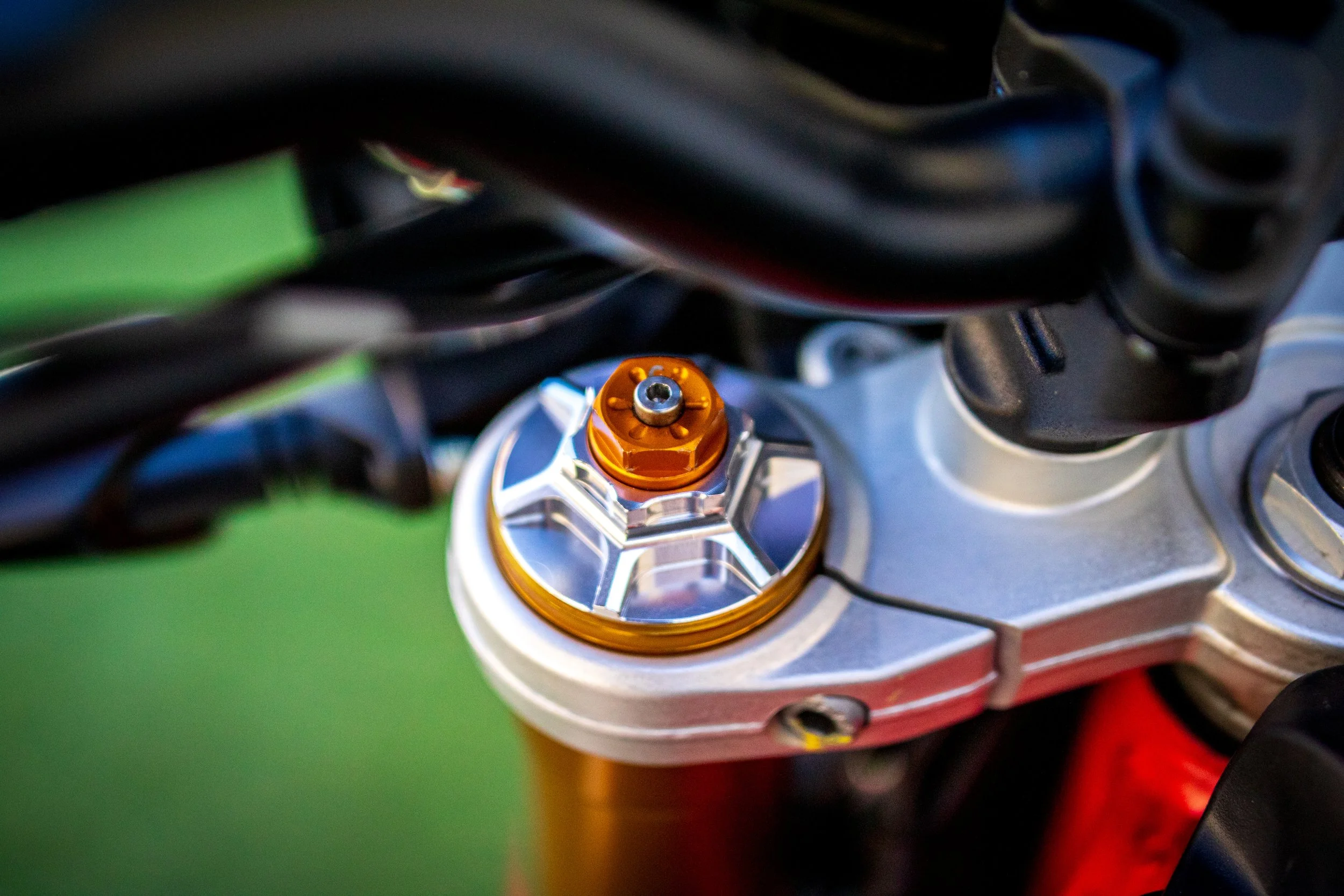
The suspension was quite soft though, and having only a 41mm fork assembly it had lots of flex, something Aprilia must have wanted to keep the chassis from becoming too stiff. The dive was intense under hard transition from gas to brake, and the rear end utilized a direct to swingarm mounted traditional emulsion shock with no reservoir, creating a harsh feeling that needed some attention for big bumps or potholes.
Sorting the suspension was relatively easy once the shock was acquired. A “vintage” style Sachs 46/16 off the 1200 Dorsoduro produced in the mid 2000’s was the base. This provided a great template that was lowered internally by 10mm to provide a more progressive valving stack and spring that eased the harshness and maintained substantially more grip when getting on the gas at lean.
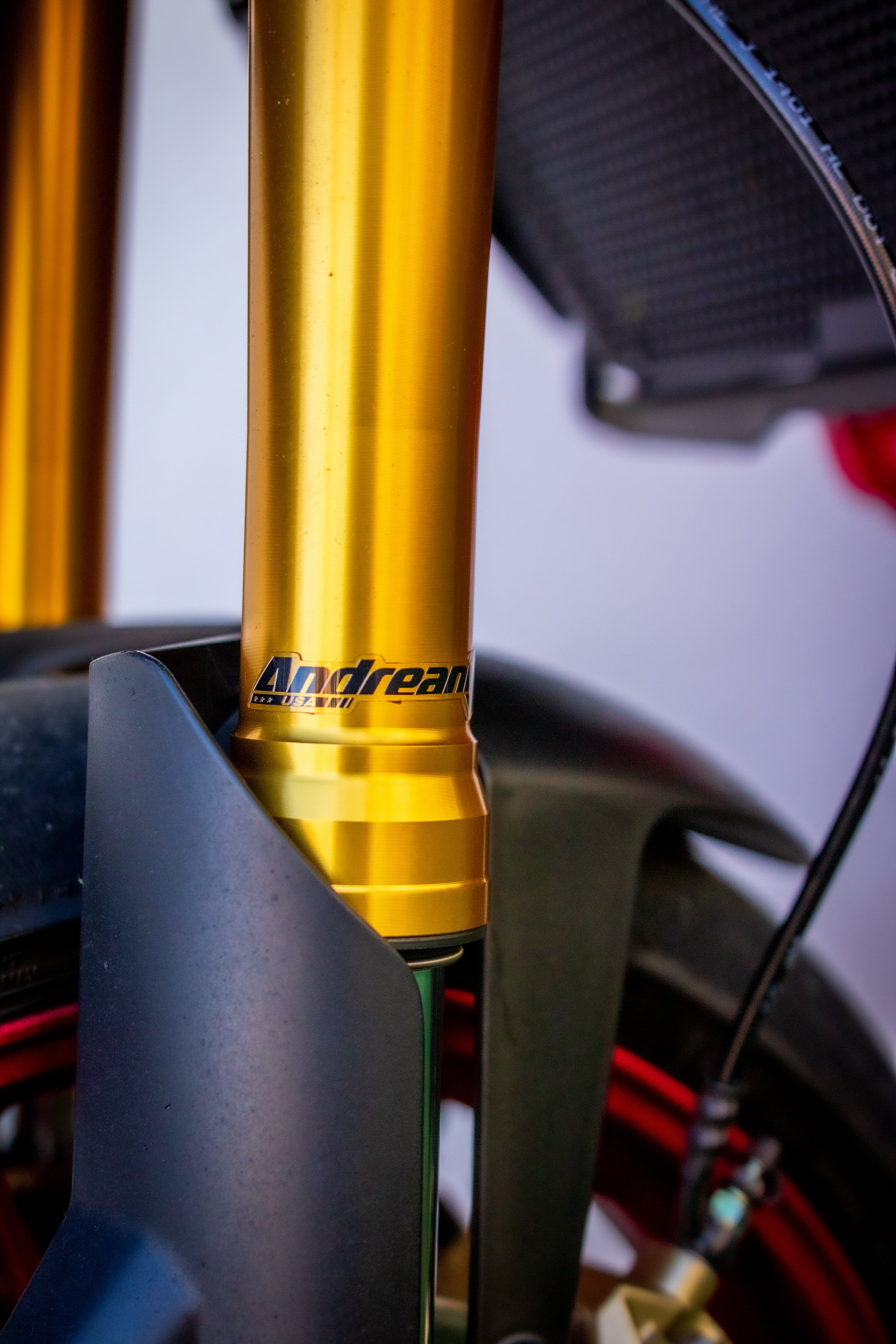
Forks were sorted with full Andreani Cartridges lowered 10mm, custom springs and then paired with road race valving that utilize a much stiffer face shim stack to make the stance more stable and controlled when riding the brakes deep into the apex of a corner. This made the chassis yaw more acceptable for a long travel bike when transitioning from either gas or brake application at higher degrees of application.
It still maintained its ability to handle real world roads with varying degrees of surface quality, but is so much more planted now and is a joy to ride casually on your commute or absolutely rip up the weekend canyons or a track day.
The Result
Cornering on the Dorsoduro often feels more interactive than on many modern motorcycles, even before these modifications. The upright position and responsive chassis allow riders to steer with body input as much as with the handlebars. Entering a series of tight bends becomes an engaging rhythm—brake, lean, accelerate, repeat. The resonance of the exhaust from the SC Project Twin Carbon Cans is addictive. Yet somehow, the decel is even better! You just grin the entire time riding this thing.
Rather than feeling overly refined or detached, the bike maintains a sense of mechanical analog connection that many of our riders found rewarding when cycling this through our circle of friends. It just moves you the way you want a motorcycle to do so.
The Dorsoduro 900 simply feels energetic and responsive, especially so after the premium additions, rewarding riders who like to interact with the machine rather than simply operate it. If you have never ridden one before, go grab one as it is a shockingly affordable platform due to being relatively low on many riders priority list, if they even know what it is.
Those that have them love them and I feel that while it is no Ducati Hypermotard, it will still develop a cult like following in a few years. Ride one if you ever get the chance as these beasts were discontinued in 2020, so they may not be around forever.